NetSuite doubles down on applied AI at SuiteWorld 2025
NetSuite’s Day 2 Product Keynote in Las Vegas opened with a knowingly cheesy, 007-style AI video and a clear through-line: “Our secret mission is to help you achieve your mission and we use AI as a tool to answer your needs.”
The session framed AI as useful only when it sits inside the work customers already do. A fresh survey set the context: 75% of customers use AI weekly and 56% use it daily, but many are unsure how to apply it well or trust its accuracy.
The answer presented on stage was to embed intelligence in close, cash, service and subscription workflows, and to keep it governed by the same roles, permissions and approvals finance and operations teams use today.
Gary Wiessinger, SVP of NetSuite application development, set the tone and brought on two customer stories, Claudia Freed, president and CEO of EALgreen, and Jim Kitchen, CIO of Continental Battery Systems, to anchor the “AI inside the work” theme. “AI isn’t the goal. It’s not the end. It’s a means to an end. The end is your success.,” said Wiessinger.

EALgreen showed how a small team uses NetSuite and the AI Connector Service to recognise donated items from images, propose values and post directly to inventory, linking the result to scholarships in real time.
Continental Battery Systems traced how standardising on NetSuite helped roll up 25 acquisitions and scale to around 175 locations with a lean IT team.
With Bill Capture and three-way match, approximately 85% of $600 million in annual AP auto-matches, pushing humans to the 15% that genuinely needs judgment.
Craig Sullivan, GVP of product management at Oracle NetSuite, took the audience into finance, showing Autonomous Close as a continuous approach that chips away at month-end work. A process monitor gives status by subsidiary, accounting book and process.
Exception management flags issues as they occur, while “flux-in-flight” explains larger-than-expected variances during the period rather than at the end.
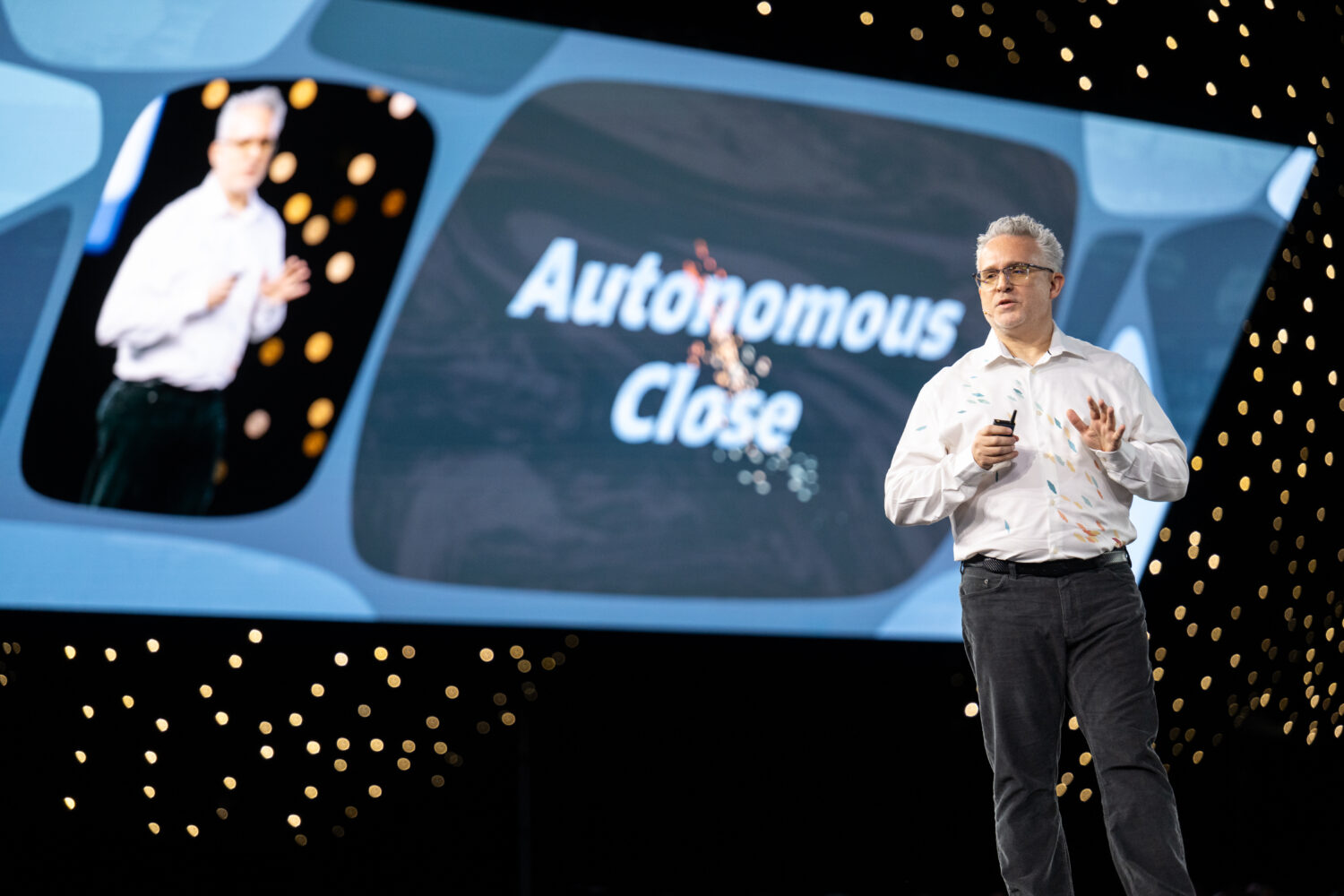
Reconciliations progress in the background, and accruals for goods received, commissions and payroll are assembled as activity happens, which makes predictive financials easier and raises “close confidence” before the final checks.
Bill Capture and Payments expanded the picture. AI and OCR interpret invoices, including foreign languages and handwriting, align them to POs and receipts, and feed an embedded payments flow through BILL that is set up in minutes and respects existing AP approvals.
International updates continued with SuiteTax rollouts and localisation, including Chile, alongside assistant support in more languages and adherence to DPAs.
Allison Auclair, GVP of product management, Oracle NetSuite, focused on recurring-revenue visibility. Subscription Metrics provides out-of-the-box KPIs such as growth, NRR, LTV, CAC and payback, with audit-ready history reconstruction, roll-forwards and drill-downs.
Narrative Insights sits beside the numbers to explain what changed and why. One example flagged a 3% NRR risk tied to early churn in a UK cohort and pointed leaders to the first three months as the weak point.
The same pattern of “monitor, explain, propose” carried into service and operations. Project managers receive client-ready status summaries in minutes and see profitability risk analysis before committing staffing decisions.
In field service, technicians get asset histories, prior case patterns, likely root causes and needed parts in a mobile flow. They can dictate notes and have them translated into the customer’s language for a clean wrap-up.
On the product side, NetSuite previewed an inventory consignment model to improve cash flow and reduce ownership risk, with warehouse additions such as automatic serial number generation and licence plates, plus order-level smart rate shopping and automated return creation.
Patrick Puck showed how the work moves from a conversational first answer to a durable artefact. Ask Oracle provides a concise response, for example, a short view of most-profitable items, then Canvas becomes the collaborative space to refine the analysis, expand an executive summary and preserve logic and lineage tied to live records.

Generated charts are “live”: drag one onto a vendor page and it stays current wherever that view appears.
New agent collaboration supports long-running tasks such as vendor follow-ups on overdue purchase orders, reporting progress over time, flagging non-responders and asking for user decisions only when judgment is required. Crucially, agents operate within the same roles, permissions and approval flows already in place.
Brian Chess closed the product deep-dive with the platform shift. SuiteCloud is being rebuilt as an open, composable AI platform so customers and partners can bring intelligence to the solutions they already run.
The AI Connector and “AI Experts” let organisations connect external assistants via MCP to reason over NetSuite data and act within policy.
Native Suite Agents can be built inside the platform to interpret documents, analyse records, communicate findings and complete multi-step flows such as processing a return authorisation, creating a zero-cost replacement and emailing the customer while updating records in real time.
Supporting this architecture are:
Under the hood, a new UI architecture fetches only what’s needed, long tasks run asynchronously and materialised views accelerate heavy queries. The stack runs on Oracle Cloud Infrastructure and the Oracle AI Database for security, observability and scale.

The keynote closed where it began, embedding AI inside decisions. Business 360 unifies cross-functional signals, surfaces risks such as capacity constraints that create service backlogs, shows projected impacts on satisfaction and cost, and proposes options from automating processes to running targeted promotions or offering self-install discounts.
Once leaders choose a scenario, Business 360 pushes work to Sales, Operations and HR and tracks results against goals in real time.
The aim is simple and consistent with the opener: “AI isn’t the goal, it’s a means to an end.” By keeping intelligence inside governed workflows such as close, cash, service, subscriptions and planning, you get fewer end-of-period surprises, faster root-cause analysis, clearer ownership and artefacts teams can share without rework.