The 52% problem draining B2B growth (and what CFOs can do)
More than half of B2B firms face mounting risks from outdated commerce systems and inefficient processes. The solution starts with CFOs taking a lead role in modernization.
More than half of B2B firms face mounting risks from outdated commerce systems and inefficient processes. The solution starts with CFOs taking a lead role in modernization.
For many B2B companies, commerce technology was supposed to be an enabler of growth. Instead, it has become a silent drag on performance.
New research from commercetools, conducted with Cascade Insights, identifies what it calls “The 52% Problem”—a convergence of manual processes, outdated systems, and late-stage financial involvement in technology decisions that threatens the competitiveness of more than half of surveyed organizations.
The findings are stark:
The consequences are tangible. Leaders cite legacy systems as the single biggest barrier to digital success (64%), pointing to high integration costs (51%), complex procurement workflows (55%), and operational inefficiencies that slow revenue growth.
Nearly half of respondents reported high operational costs tied directly to their existing platforms.
“Inaction comes with a price,” said Dirk Hoerig, founder of commercetools. “When financial leaders are sidelined, organizations miss the opportunity to align technology investments with business outcomes.”
CFOs are not just budget approvers—they are risk managers, strategists, and increasingly, catalysts for transformation.
The report shows that when financial leaders enter the process late, companies face stalled procurement cycles, poorly scoped technology investments, and missed opportunities for long-term cost savings.
Economic uncertainty is raising the stakes: 79% of respondents say future-proofing is now a higher priority.
Yet without early financial oversight, modernization efforts risk becoming short-term fixes rather than strategic shifts.
The research suggests that modernization is no longer optional. 52% of current commerce stacks will be unsupported within two years, exposing companies to security vulnerabilities, compliance risks, and integration headaches.
Operating outdated systems is likened to “running a factory with unmaintained machinery”—costly, inefficient, and increasingly risky.
Forward-looking CFOs see modernization not as an IT project but as a business transformation opportunity.
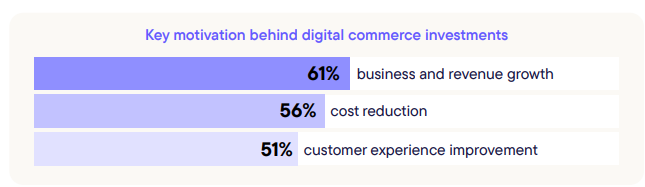
61% of leaders cite business and revenue growth as their primary goal for upgrading commerce platforms, with cost reduction (56%) and improved customer experience (51%) following close behind.
The report highlights Coflex, a manufacturer that modernized its operations in 90 days by adopting a composable platform.
The new B2C-style portal serves over 80% of its customers and is used by nearly 90% of its sales force, driving measurable revenue gains.
The success, executives said, came from cross-department collaboration and early alignment between finance, IT, and commercial teams.
The research underscores a necessary shift in how CFOs engage with commerce technology decisions.
Instead of serving as late-stage gatekeepers, they must become early-stage partners shaping strategy, ensuring investments deliver ROI, scalability, and integration with financial systems.
The report calls for CFOs to view modernization as a hedge against rising operational costs and future disruptions.
The key metrics—improved productivity (61%), better customer experience (57%), and enhanced cash flow predictability—directly link commerce investments to financial outcomes.
For B2B companies, the 52% Problem is both a warning and an opportunity. Legacy systems nearing end-of-life and inefficient processes can no longer be ignored.
The solution is not simply replacing outdated technology but embedding financial leadership at the heart of modernization efforts.
By stepping into this role, CFOs can turn a looming liability into a platform for growth—aligning technology investments with long-term business resilience.