International Women’s Day is a great opportunity to honor and celebrate the achievements of female leaders across an array of industries, and to reflect on the progress made, particularly within traditionally male-dominated fields, such as technology and financial services.
However, work still needs to be done as women account for just 18.6% of senior executives in the UK financial services industry. In the spirit of this year’s theme of ‘Give to Gain’, female leaders in the fintech industry share what powered their personal career growth, and what collective action needs to be taken to further increase diversity and nurture female talent.
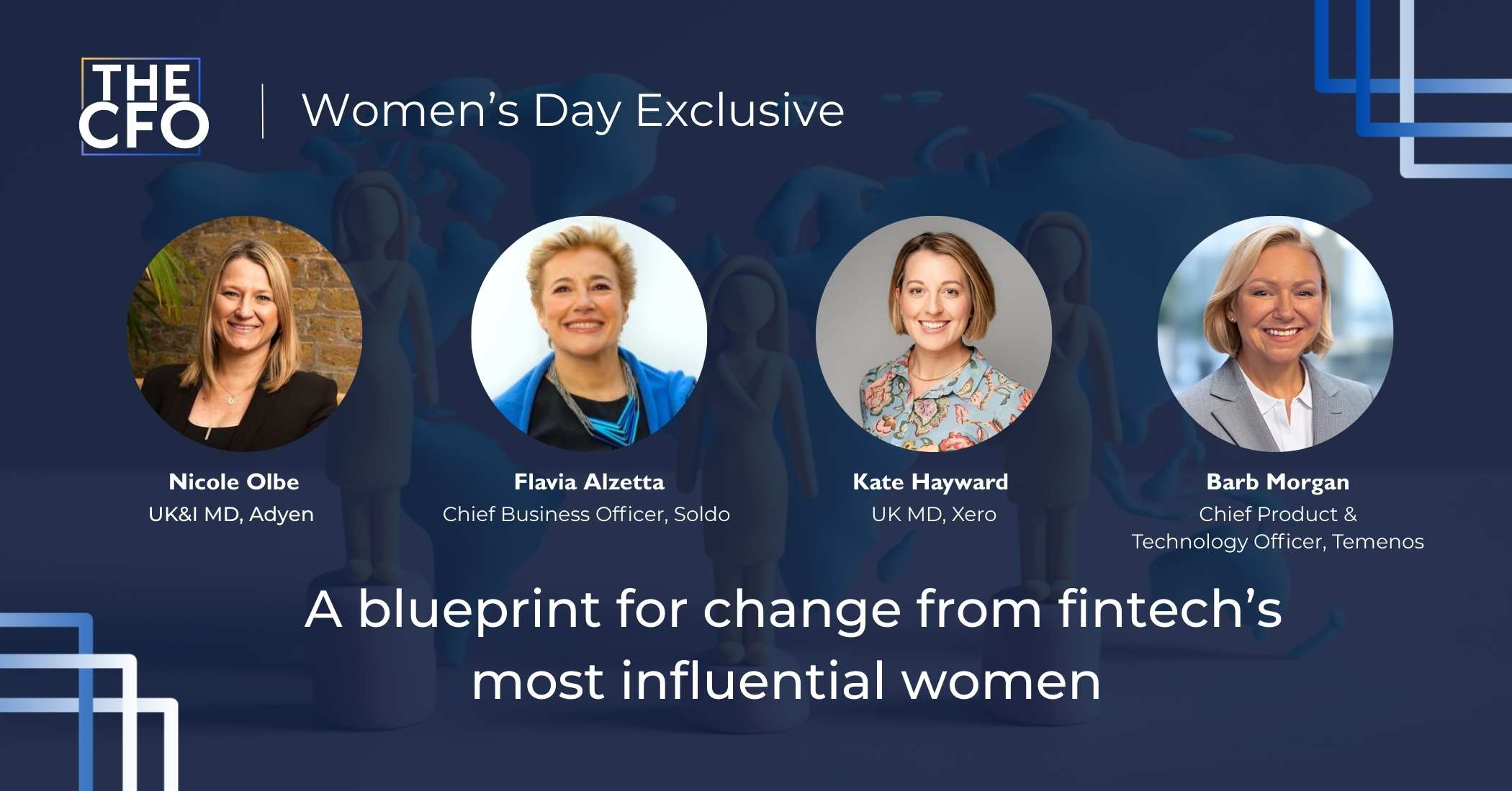
Mentorship is more than just a meeting
Behind many successful leaders is a career mentor who acted as a voice of guidance and empowered them to progress. Mentorship represents far more than a ‘nice to have’ initiative and often operates as a vehicle for boosting confidence and elevating women.
Nicole Olbe, UK&I Managing Director at Adyen affirms this, “Progress happens when we intentionally open doors, amplify women’s voices, and challenge systems that were not designed with everyone in mind. In practice, this means creating environments where women are trusted to lead boldly. When we actively sponsor and advocate for women at every level, we do more than just bridge the gap; we build stronger teams. Equality is not a moment we mark once a year; it is a responsibility we act on every day.”
Flavia Alzetta, Chief Business Officer at Soldo agrees with this, stating, “I think that in the specific area of leadership, focusing on role models and mentorship initiatives can help to drive the strength and development of female leaders. For mentees, it offers an enriching learning experience and access to relatable, practical guidance. For mentors, it provides a hands-on, rewarding leadership opportunity. And for businesses, it is a meaningful way to foster a more inclusive culture and make genuine progress in accelerating diversity.”
On top of this, these frameworks can also provide a competitive edge to companies, with Olbe commenting, “Every time we invest in another’s development, we gain more than we give: sharper thinking, fresh perspectives, and a renewed sense of purpose. This exchange is the very heartbeat of innovation.”
The wider impact of investing in individuals
Investing time and financial support in individual talent is often seen as a business’s responsibility. Yet meaningful change frequently happens when individuals go out of their way to champion someone more junior or even provide help to someone in a completely different company, rather than relying solely on formal initiatives. For early-career professionals, that personal commitment can be truly transformative.
For Kate Hayward, UK MD at Xero, investment – both with time and sponsorship – was such a significant factor for her career growth, that she now looks to ‘pay forward’ the favour:
“Throughout my career, I’ve benefited from having sponsors who actively invested in my development, so this year’s International Women’s Day theme, “Give to Gain”, strikes a deep chord. That investment has taken different forms, from mentorship and opening doors to championing my career progression in a way that has helped me balance work, family and ambition.
However, even with this support many women still feel like they don’t have the necessary skills to back themselves in business. As Hayward goes on to say, “Our research shows that a quarter of women (25%) believe they do not have the skills to manage crucial aspects of their business finances. Women are also more likely to say that they are ‘not a numbers person’ (32%), compared to men (22%).”
This is why Xero has launched several initiatives to help address this broader industry imbalance, with Hayward explaining, “Through the Unlock Your Numbers programme and our Financial Confidence Taskforce, we’re aiming to provide the tools, training and mentorship that makes financial literacy easily accessible to everyone at every stage of life.”
Addressing AI bias
Beyond the actions of businesses and individuals, there’s another area which needs to be addresses – AI bias. While this technology is transformative it can often lack the human touch, as Barb Morgan, Chief Product and Technology Officer at Temenos explains, “AI is transforming how businesses operate at speed, but for all its power, it still lacks something essential: human empathy. And that’s where women excel. Models are only as good as the questions they’re asked, and so EQ is a superpower in the age of AI.”
By balancing AI with empathy companies can super charge their transformation and create a truly equal business environment for the future. As Morgan¸ goes on to explain, “The opportunity now is to be intentional. To collaborate and design in ways that reflect the whole customer. Inclusive by default, not as an afterthought. As companies race to unlock AI’s long-term value, diverse perspectives aren’t a nice-to-have; they’re a business imperative for trust and technology that works at scale. There’s never been a more important time to bring women’s voices, skills, and EQ to the table.”
The fintech industry must start giving to gain
As much as International Women’s Day marks a moment to celebrate the success initiatives have had in boosting female representation within fintech, it is also a reminder that the industry must continue to step up. As the experts have highlighted, businesses need to show up for women if they are genuinely committed to empowering female voices and talent. Those that do will help shape the future of fintech; those that do not risk falling behind the curve.